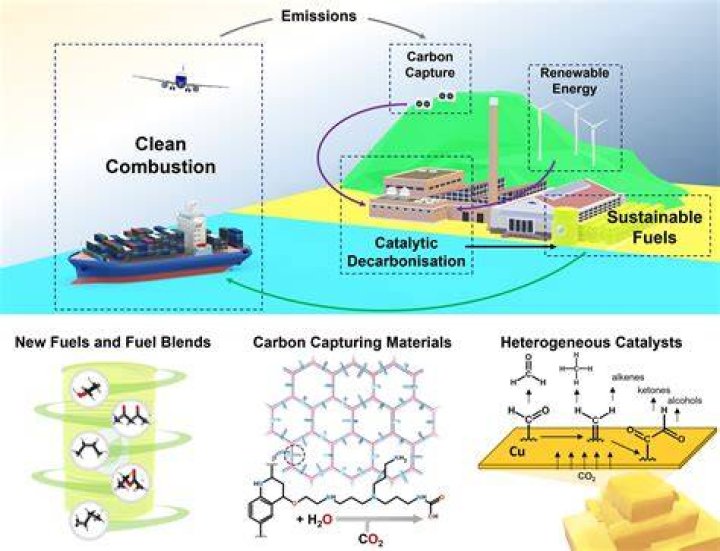
Decarbonization-as-a-Service is a service that focuses on helping businesses to reduce greenhouse gas emissions (CO2e) from their suppliers. It combines technology, emissions, commercial and supply chain expertise to diagnose where the impact is, identify supplier solutions, and deliver the gains.
What is the industry goal for Decarbonization?
What is the goal of decarbonization? The ultimate target is to achieve carbon neutrality, meaning a return to levels of CO2 naturally present in the atmosphere prior to human intervention.
How to achieve decarbonisation?
To achieve deep decarbonisation, we need to rethink how we produce and consume energy and operate a radical switch to renewables and low carbon energy sources. In practice, getting to zero net emissions requires switching to clean energy sources and shifting from fossil fuels to electricity.
What is supply chain decarbonization?
Supply Chain Decarbonization Offers a Game-Changing Opportunity for Companies to Fight Climate Change. The report breaks down the major sources of emissions along each of the eight major supply chains—food, construction, fashion, fast-moving consumer goods, electronics, automotive, professional services, and freight.
How much will it cost to Decarbonize?
Decarbonizing these four major sectors will take a careful mix of strategies and technologies. In a recent report, we estimated the cost of decarbonizing these four sectors to be about $21 trillion through 2050, a figure that could be nearly halved in zero-carbon electricity prices continue to drop.
What is gas decarbonization?
Decarbonisation of gas can be achieved by different ways and means. In other words, decarbonisation entails different ways by which the greenhouse gas emissions associated with the life cycle of natural gas from its source to the end user can be avoided, eradicated, or mitigated.
Does Decarbonisation include methane?
The resulting fuel is typically biogas (a mixture of methane and other gases) or biomethane (resulting from the separation of methane from the other biogas components). Many of these “common sense” approaches apply not only to natural gas, but also to methane-containing decarbonised gases.
What is sustainable supply chain management?
Sustainable supply chain management involves integrating environmentally and financially viable practices into the complete supply chain lifecycle, from product design and development, to material selection, (including raw material extraction or agricultural production), manufacturing, packaging, transportation.
